This beautiful image word is nowhere in the OED.
- 13.051 of the dragon-haunted caverns,
This beautiful image word is nowhere in the OED.
It is not attested in OED with a hyphen, a space, or as a single word.
This beautiful word is not found in OED hyphenated or compound – it is JRRT original for our purposes, and much used by modern fantasy authors. And my favorite form of the word? Right here. The ultimate lullabye.
This hyphenated word is made from two common words. It’s not found either hyphenated or as a compound word in the OED, so is a JRRT original for our purposes.
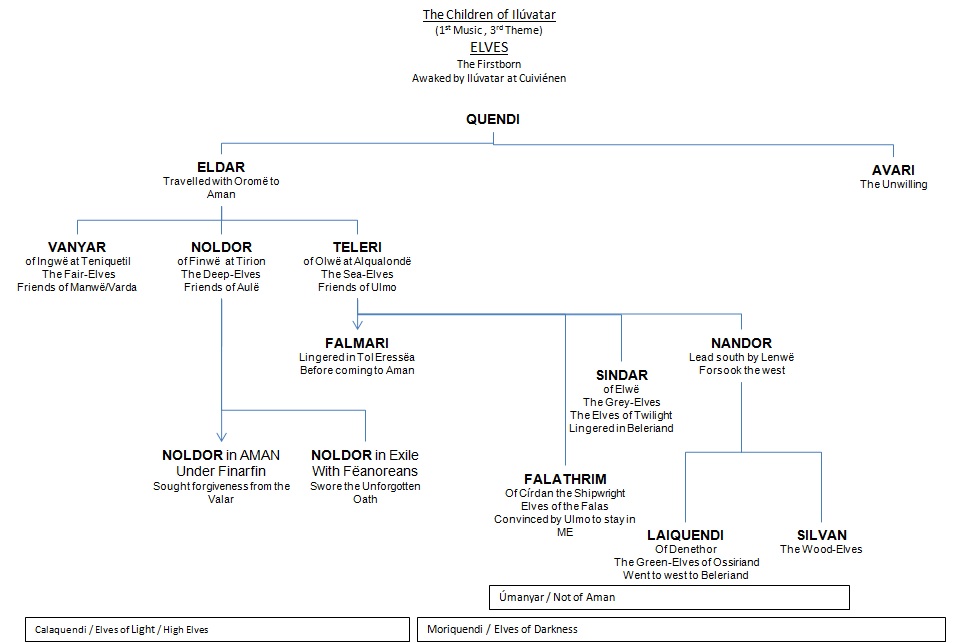
“Elf” is an uncommon word. The hyphenated combination is unattested in OED, therefore a JRRT original. Tolkien spun out a marvelously complex tapestry of interrelations between types of Elves in his legendarium.
[08.131] The feasting people were Wood-elves, of course. These are not wicked folk. If they have a fault it is distrust of strangers. Though their magic was strong, even in those days they were wary. They differed from the High Elves of the West, and were more dangerous and less wise. For most of them (together with their scattered relations in the hills and mountains) were descended from the ancient tribes that never went to Faerie in the West. There the Light-elves and the Deep-elves and the Sea-elves went and lived for ages, and grew fairer and wiser and more learned, and invented their magic and their cunning craft in the making of beautiful xx and marvellous things, before some came back into the Wide World. In the Wide World the Wood-elves lingered in the twilight of our Sun and Moon…
The Tolkien Gateway article on them may be found here. A beautifully detailed genealogy of individuals may be found here. Finally, a very accessible chart of the relationships between different groups of Elves may be found here.
“Dart” is an uncommon word. Dart-throwing is unattested in OED, so JRRT original.
Say it aloud! This name is a sound-play word – hinting that the Raven language is still spoken all around us and we have lost the wit to understand.
Tolkien writes in his Essay on Phonetic Symbolism about the origin of this name – and of his father’s
rook is no longer krāg or krāk or χrk from which it took its use.
Tolkien, J. R. R.. A Secret Vice: Tolkien on Invented Languages (Kindle Locations 1954-1955). HarperCollins Publishers. Kindle Edition.
“Bowstring” is approximately the 67,700th most common word in the Gutenberg corpus, “bow-string” is not found in the 100K! Each is used once, and in very different settings. I am intrigued that Bilbo’s word that he thinks of internally to indicate his state of anxiety is not hyphenated, while the name for the tool that Bard used is. Not a Shire word, then, yet expressed as a specialty word that Tolkien (translator) had no word for – different from a bowstring. Perhaps the greater bow of a mighty man had a different sort of string.
OED does give “bowstring” the head word and “bow-string” in the examples.
“bow-string | bowstring, n.” OED Online. Oxford University Press, June 2017. Web. 5 September 2017.
Although “smith-work” is found in OED, the specific work of a blacksmith is not, so this is a JRRT original hyphenated word.
In the 1937 edition of The Hobbit, this word phrase does not appear.
In the OED, it has a compound word entry “birthday present” with an example of “birth-day present”, but in no case hyphenated as JRRT uses it here.
“birthday, n.” OED Online. Oxford University Press, June 2017. Web. 5 September 2017.
 words that you were saying